A car that won’t stay fixed can wear you down fast. The same warning light returns after two shop visits, or the transmission shudders again before the loan paperwork has even cooled. You start to wonder whether you bought a problem, not a vehicle. When you reach that point, your conversations with the dealership stop being casual. They become strategic. Getting traction requires planning, documentation, and the right tone. What you say and how you say it can determine whether you get a quick resolution or months of friction.
This guide lays out how experienced consumers approach a suspected lemon. It reflects the rhythms of how dealers operate, what service managers pay attention to, and how lemon law claims unfold. It applies to both purchased and leased vehicles. If you’re dealing with a lease, keep an eye on the additional wrinkle that you don’t hold title, yet most states still apply lemon law protections. Terms like Lemon vehicles, Lemon law for leased vehicles, and regional counsel like Houston Lemon Lawyers matter, but they’re most useful when paired with clean facts and a clear ask.
Start with your evidence, not your frustration
Dealers listen to paperwork. Show, don’t tell. Bring the vehicle in with a concise packet: prior repair orders, dates the car was out of service, and a written description of the symptoms. Your goal is to make it easy for a service advisor to escalate. Service departments operate on process. When your file reads cleanly, you move faster.
A modest example: a client tracked a stalling issue on a new SUV. She kept a log in her phone with date, odometer, outside temperature, and whether the fuel tank was above half. That log, paired with three repair orders and a video of the RPM drop, gave the service manager enough to request manufacturer engineering support within a day. No raised voice required.
Include:
- All repair orders, in date order, with any parts listed or software versions noted A simple log of symptoms: date, mileage, conditions, frequency Photos or short videos showing the defect, when safe to capture Tow receipts, rideshare receipts, or rental invoices linked to downtime Your purchase or lease agreement, warranty booklet, and contact info
Keep the tone neutral and factual. When you lead with evidence, you shift the conversation from opinion to verification.
Set the frame early: safety, reliability, and repeat failure
Most lemon standards share two themes: the defect substantially impairs use, value, or safety, and the manufacturer had a reasonable number of attempts to fix it. Those are the pillars that matter to the manufacturer, the dealership, and eventually an arbitrator or court. When you speak to the dealer, frame your problem consistently on those points.
Describe the symptom and why it matters. A sunroof rattle is annoyance. Brakes losing pressure at low speeds is safety. An infotainment freeze that locks out climate control and backup camera affects use. If your vehicle is leased, note that Lemon law for leased vehicles still hinges on the same core issues, even though the leasing company holds title. Dealers know this, and it underscores the seriousness.
If you think your car may be one of the classic Lemon vehicles, use language that maps to the standard without turning the conversation into a legal lecture. Something like, my vehicle has had the same stalling issue four times, and it creates a safety risk when turning left across traffic. I need a reliable fix or guidance on next steps with the manufacturer. Clear, specific, and grounded in function.
How dealers and manufacturers typically view your complaint
Understanding incentives helps. The dealer wants to fix the car under warranty and get paid by the manufacturer. They do not want escalating callbacks, manufacturer audits, or buyback paperwork unless the facts require it. Service advisors are measured on throughput and customer satisfaction scores. Service managers care about fixed first visit rates, comebacks, and how many cases reach field engineers.
Manufacturers track patterns by VIN and by campaign. When a repair crosses a threshold, the dealer may need to open a technical assistance case. That is your opportunity. You want that case opened sooner rather than later, because manufacturer engineering notes dictate better diagnostics, authorize advanced repairs, and create a record that supports relief if repairs fail.
With that view, your ask is not vague. You’re asking for a proper diagnosis with manufacturer support as needed, precise documentation of findings, and a plan if the failure returns.
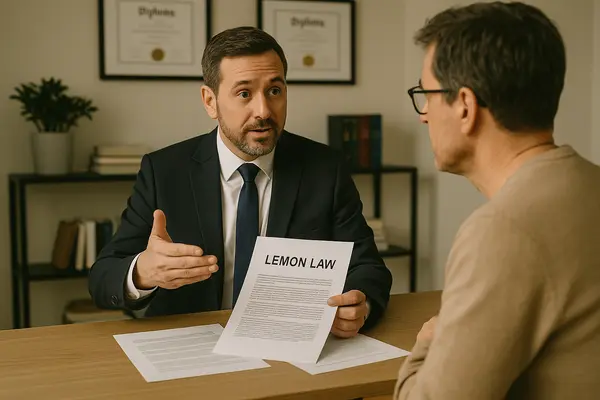
What counts as a “reasonable number” of repair attempts
The exact numbers vary by state, but the common patterns look like this: three to four attempts for the same defect, or a cumulative downtime threshold, often 30 days within the first year or within the warranty period. Some states accelerate the timeline for safety defects, and some reset or toll the clock if parts are backordered. If you are in Texas, for example, the state lemon program focuses on four or more repair attempts or 30 total days out of service for warrantable repairs, generally within the first 24 months or 24,000 miles. That’s a simplified description, not a full recitation.
Why this matters in your conversation: your third return for the same issue should trigger different behavior. Ask whether the dealer has opened a case with the manufacturer, whether a field rep can inspect, and whether a buyback review is appropriate if the next attempt fails. If you approach that third or fourth attempt with vague complaints, you risk another generic repair order instead of the escalation your situation warrants.
The repair order is your strongest document
Read the repair order before you sign it. The line that describes your concern is the line an arbitrator will read. Instead of service engine light on, intermittent, ask the advisor to write what you actually experience: engine stumbles and stalls at idle after warm restart, occurs 3 to 4 times per week, more frequent with A/C on. If the concern is safety related, it should say so in that line.
Ask for the technician’s story to be robust as well. Verified customer concern, performed guided diagnostics per TSB X, found misfire counts high on cylinder 3, replaced coil and reprogrammed ECU, test drove 14 miles, no recurrence. That level of detail proves an attempt. If your state looks for reasonable attempts, details like guided diagnostics and TSB references demonstrate the dealer didn’t just clear codes.
If the car is leased, make sure the repair orders are in your name as lessee and show the VIN and mileage. Lemon law for leased vehicles relies on the same documentation, and your records should be indistinguishable from those of an owner.
How to structure the conversation at each stage
Early stage, first or second visit: you’re building history. Ask for a thorough diagnosis, mention any patterns you’ve observed, and request that the dealer check for technical service bulletins and software updates. If the advisor suggests a quick reset, ask what the underlying cause might be and whether a reset is likely to recur.
Middle stage, third visit for the same defect: your tone shifts to escalation. You might say, this is my third repair attempt for the same defect within X months. Please open a case with the manufacturer and request guidance. If it fails again, I want to discuss next steps for replacement or repurchase with the manufacturer. You are not threatening, you are forecasting process.

Late stage, fourth visit or more, or 30-plus days out of service: you are ready to ask for a remedy. At this point, the dealer’s role is usually to collect paperwork and transmit it to the manufacturer or a state program. Keep the conversation concise and ask for a timeline. Document every promise, who made it, and when.
When a test drive with the technician helps
Intermittent problems can be tough to reproduce in a bay. If your issue appears under certain conditions, ask to ride with a technician. That short drive can save weeks. I had a case where a client’s braking concern only appeared after 20 minutes on the highway, then a downhill exit. We planned the route, reproduced the soft pedal, and the technician captured live data that led to a master cylinder replacement. Without that ride, the advisor’s note might have stayed unable to verify customer concern.
Bring your log. Point out conditions. If the vehicle misbehaves more with cargo or a full tank, say so. The more you help the tech recreate the failure, the cleaner your file looks and the stronger your claim if the defect persists.
Be careful with phrases that can backfire
Avoid telling a dealer how to fix the car. Describe the symptom and its effect. If you say replace the transmission, you risk anchoring the diagnosis in the wrong place. Likewise, avoid, it’s probably just the https://pixabay.com/users/53921334/ battery, unless you’re ready for a quick swap and a repeated failure later. You want the technician’s independent diagnosis on the record.
Be cautious about authorizing expensive non-warranty repairs on a new vehicle without a clear explanation of why the part isn’t covered. If the dealer says the issue is wear and tear on a car with 3,000 miles, ask for that rationale in writing and consider a second opinion. You can be assertive without being adversarial.
Software issues, over-the-air updates, and the new frontier
Modern Lemon vehicles often involve software. A hard reset clears the symptom, then it returns two days later. Over-the-air updates arrive at night, you accept them, and the next morning the camera suite reports unavailable. These cases require detailed documentation of software versions and update dates. Ask the advisor to note current versions for major modules and to record update history. If the vehicle rolls back after an update, that is significant.
Software defects can still qualify as substantial impairments. If your EV’s charging system rejects Level 2 chargers randomly, that impairs use. If your driver assist suite deactivates without warning, that touches safety. Make sure the repair orders capture module names, version numbers, and any TSBs that reference software.
Leased vehicles: who does what
With a lease, you are the customer and the driver, but the title holder is the leasing company. Lemon law for leased vehicles generally grants you the same path to relief, but the final paperwork may require the lessor’s involvement. When you near a buyback conversation, notify the leasing company and ask for their process. Some lessors have dedicated teams for manufacturer repurchases and will provide the payoff figures and forms you need.
One trap to avoid: early termination penalties. A lemon law repurchase usually satisfies the lease and wipes those penalties, but you need the manufacturer’s written offer to reflect that clearly. Keep your lease contract handy and compare the numbers.
What a manufacturer buyback typically looks like
If your case qualifies, the manufacturer may offer a repurchase or a replacement. A repurchase usually covers the purchase price or, for a lease, the total of payments made and certain fees, reduced by a mileage offset based on when the defect first appeared. Expect a deduction tied to the odometer on the first documented visit for the defect. The formulas vary, but the concept is common.
A replacement typically means a substantially similar vehicle. If you’re driving a configuration that is hard to match, negotiate carefully. Ask how taxes, registration, aftermarket items, and negative equity will be handled. If you added window tint or a bed liner, you may not recover that cost without a specific agreement.
Put a calendar to this. From the first serious complaint to an offer, even clean cases can take weeks to a few months, depending on parts availability, manufacturer response times, and whether a state arbitration step is required. In Texas, for instance, you can pursue the state’s administrative program, or sometimes you can work directly with the manufacturer. Counsel familiar with your jurisdiction, including Houston Lemon Lawyers for Texas buyers, can help steer you to the most efficient route.
Arbitration and state programs
Many states require that you attempt arbitration or a state-run process before going to court. These forums are document-heavy and time-limited. Your repair orders, logs, and communications become the entire case. This is where your earlier discipline pays off.
Arbitration panels look for consistency. Do the repair orders describe the same complaint each time, or do they ping-pong between different systems? Did the dealer follow manufacturer diagnostics? Were parts replaced? How many days was the vehicle down? If the panel sees three clear attempts for the same defect plus significant downtime, your odds improve.
If your state runs its own lemon program, follow the instructions precisely. Deadlines matter. Filing windows can be as short as 6 to 24 months from delivery or a set mileage threshold. When in doubt, file sooner and supplement your file as new repair orders arrive.
How to keep communication productive
Service advisors handle dozens of customers daily. If you want priority, be the customer who makes their job easier. Show up on time. Provide a clear description. Answer the phone. Avoid venting at the front desk staff. Direct your concerns to the decision-maker, the service manager, and, when escalation is needed, the manufacturer case manager.
At key points, recap in writing. A short email that reads, we discussed my third repair attempt for the stalling issue on VIN X. You agreed to open a manufacturer case and request a field engineer inspection. Please confirm the case number. This creates a trail. If you later consult Lemon Lawyers, they will thank you for that thread.
Common dealer responses, and how to handle them
We were unable to replicate the concern. Ask what steps were taken to reproduce it and whether a longer drive or specific conditions could be tested. Offer to demonstrate, if safe. Ask the advisor to document your description even if they cannot verify.
It’s normal operation. Normal has a definition. Ask for the TSB or the page in the owner’s manual that states the behavior. If the answer is subjective, request a second opinion or a road test with a technician and the service manager.
We need more time for parts. Parts delays count toward downtime in many states if the repair is covered under warranty. Keep track of the days your car sits at the dealership. If the dealer suggests you pick up the car while waiting for parts, balance convenience against documentation. Keeping the vehicle at the dealership might bolster a downtime claim, but only if the wait is reasonable and you have alternative transportation.

We updated software, let us know if it returns. That may be fine for a first attempt. By the third visit, ask what else is planned if the reset fails again. Request escalation and technical assistance. Software that repeatedly fails points toward a deeper issue.
When to seek legal help
If your vehicle meets or approaches the thresholds for attempts or downtime, or if the dealer refuses to open a manufacturer case while your symptoms persist, it is time to talk to counsel. Many firms review files at no cost and will tell you whether you are on track or need to course-correct. Local experience matters. Houston Lemon Lawyers will know Texas timelines, the state program forms, and the manufacturer reps who handle buybacks in the region. In other states, look for attorneys who handle auto warranty disputes regularly and can cite recent outcomes.
Good counsel focuses on strategy as much as litigation. They might advise one more documented visit with specific language on the repair order, or they might steer you straight to arbitration. They can also protect you from signing general releases that give up more than you realize.
If you still need to drive a suspected lemon
Safety first. If the defect compromises steering, braking, or power in traffic, park it and have it towed. Towing under warranty is often covered. If the issue is inconvenient but not unsafe, keep a steady routine. Drive the same commute when possible, note conditions, and capture data. Do not modify the vehicle or install aftermarket parts while a warranty dispute is pending. Modifications muddy causation and give the manufacturer an easy argument.
For leased vehicles, keep making payments while the claim proceeds. Falling behind complicates everything. Relief, if awarded, will typically account for payments made. Interruption risks repossession and damages your credit regardless of the lemon outcome.
The tone that opens doors
Calm, specific, and persistent. That is the combination that gets traction. Dealership staff are human. If you present as organized and fair, they are more likely to invest time, call in favors, and push your case with the manufacturer. You can be firm without being combative. A short phrase I’ve seen work: I appreciate your help, and I need a reliable vehicle. If this repair doesn’t resolve it, please help me with the next step with the manufacturer.
A short roadmap you can follow
- Gather documents: all repair orders, logs, purchase or lease documents, warranty info Frame the issue: safety, use, or value impairment, described in specific terms Control the repair orders: accurate symptom descriptions and detailed technician notes Escalate at the right time: manufacturer case opened by the third attempt, field rep if needed Seek help: consult Lemon Lawyers when thresholds approach, especially for leased vehicles
A note on expectations
Most defects are fixable. Many vehicles that look like lemons in the first month end up reliable after a truly targeted repair. Give the dealer a fair opportunity to diagnose and fix. At the same time, protect your rights. Track days out of service from the first visit, not the third. Watch your mileage and the calendar. If a case turns into a buyback, the clean file you built will shorten the path.
If you’re reading this because you’re already on attempt number four, you have leverage, not just frustration. Use it wisely. Stick to the facts, insist on solid documentation, and keep your requests aligned with the process that dealers and manufacturers recognize. Whether you end up with a repair that finally holds, a replacement, or a repurchase, the way you talk to the dealer can either open doors or close them. Aim for doors.
Houston Lemon Law Lawyer A is a lemon law firm located in Houston, TX
Houston Lemon Law Lawyer A serves consumers with lemon vehicles
Houston Lemon Law Lawyer A offers free consultations
Houston Lemon Law Lawyer A address is 401 Franklin St Ste 2400, Houston, TX 77002
Houston Lemon Law Lawyer A phone number is (832) 340-6885
Houston Lemon Law Lawyer A has the following website https://houstonlemonlawlawyera.com
Houston Lemon Law Lawyer A has the following google map listing https://maps.app.goo.gl/MSn5ebN4kMhDJ2YL8
Houston Lemon Law Lawyer A has this Facebook page https://www.facebook.com/profile.php?id=61585182443125
Houston Lemon Law Lawyer A has this twitter profile https://x.com/HoustonLemonLLA
Houston Lemon Law Lawyer A has the following Linkedin page https://www.linkedin.com/in/houston-lemon-law-lawyer-a-5ab12b3a1
Houston Lemon Law Lawyer A has Youtube channel https://www.youtube.com/@HoustonLemonLawLawyerA